Friday, May 14, 2010

Storyboarding: the Three-Shot

Today the topic is the three shot -- a composition that not only includes three people, but deals with the relationships between them

 
Click on the full-screen button (at the bottom right
of the video player
), to make the movie nice and BIG!

The general guideline for when to cut is that you always want to be looking at whatever is the most important thing to the story at any given time. At this point, the dramatic relationship on the screen is specifically between three people: Portia, Mary-Frances, and Bessie.


Other topics in this video include acting, corresponding pairs of camera angles, scene descriptions, contrast as a storytelling tool, and "The Magic of the Cutaway."
Mighty-B Storyboard Bessie glove

Questions or comments?

I'd love to continue the conversation in the comments section below!
-----------------------------

Wednesday, May 12, 2010

Storyboard: The Close-Up

The storyboard artist is really a director at this point in the production process. It's up to the storyboard artist to direct the eye of the audience toward whatever is most important at any given time.

Click on the full-screen button (at the bottom right
of the video
), to make the video nice and BIG!

When the emotion or the reaction of the character is especially important , it's time to cut to a close-up. A close-up can best be defined as a head-and-shoulders shot

There’s no real room for the character to move, so the audience can focus on the expressions and emotions of the characters. The way characters act and react is always very important to understanding the story.

bogart close-up

A common mistake of less experienced storyboard artists is framing their shots too tightly. Even a close-up should have a bit of breathing room, unless it is the rare occasion of an extreme close-up.

Shirley MacLaine The Apartment

This also has to do with pacing... it's best to save those high-impact shots were the moments in the story that have the greatest impact.

If a storyboard artist were to fill their board from start to finish with lots of crazy angles, fancy camera moves and extreme close-ups, it would leave no room for the artist to show any real impact when it's really needed. It's all about contrast.

Closeup Vertigo Jimmy Stewart

In the next video, the topic is the "three shot" -- and the interaction between three characters.

Questions or comments?
I'd love to hear from you in the comments section below!
--------------------------------------------------

Other posts in this Storyboarding Commentary series:

Tuesday, May 11, 2010

Have You Seen These Super-Funny Steve Mellor Comics?

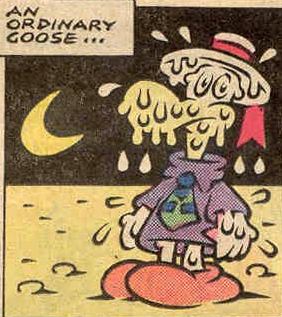
Steve Mellor funny comics marvel goose rider

Lately on his CartoonRetro blog, Shane Glines has been featuring the cartoon stylings of Steve Mellor

Steve Mellor funny cartoon Marvel superhero comics 
Steve Mellor draws some of the most gorgeously goofy and garish graphics I’ve ever seen!
Steve Mellor funny cartoon comics Marvel superheroes
There’s a ton of scans from a variety of comics.
Check ‘em out at:

http://cartoonretro.blogspot.com/2010/04/goose-rider-by-mellor.html

http://cartoonretro.blogspot.com/2010/04/steve-mellor-crazy.html

or you can see all the Steve Mellor posts at:
http://cartoonretro.blogspot.com/search/label/Steve%20Mellor

---------------------------------------------------------

The storyboard commentary video series will continue shortly...in the meantime, check out the previous posts and leave some comments and/or questions at the posts listed below:

#1 - Storyboard Scans and Overview

Friday, May 7, 2010

Staging and Design – Storyboard Commentary Video

Today's storyboarding commentary video talks about staging and composition; planning out your drawings to leave room for characters and actions. Also, designing props and background elements that aid in your storytelling.

The video window above looks small, but if you click on the full-screen button (at the bottom right of the video), it'll look nice and BIG!

A little bit of planning can make a big difference. This scene was staged with the second panel in mind. Knowing that Mary-Frances was going to enter the scene and admire Bessie’s pile of work, we left plenty of room in that first panel.

Mighty-B_Storyboard003


One of the best bits of advice I ever received was, “stage a scene based on the widest action.”  It’s usually not necessary to zoom in super close on the characters…it’s nice to leave some breathing room. This allows for nice negative shapes around the characters, and allows you to draw the key players and props with easily-readable silhouettes.

Storyboard staging and composition
Every character is drawn with a specific expression that reveals their character, and (as we’ll see later) advances the story.
--------------------------------------------
Yesterday I went through the comments again on the last few posts and answered a ton of questions that were asked there. So if you left a comment before, you may wanna check back on those posts (see links below) to find your answer. If its not there yet, it’ll be coming soon.
--------------------------------------------------
Other posts in this Storyboarding Commentary series:

Thursday, May 6, 2010

When to CUT? Storyboard Commentary Video

Today's storyboarding commentary video talks about one of the most common questions about storyboarding: when to cut.

As you'll be able to see in the video, it's important to cut closer on a character or an action when they're doing something specific that really needs to be seen.


The video window above looks small, but if you click on the full-screen button (at the bottom right of the video), it'll look nice and BIG!

The general principle that I use is that I try to get as close as possible to show whatever is most important at that moment, while still leaving enough room for any actions that might occur in that scene.

Storyboard drawing: Car makes a U-Turn on the turnpike
That may mean that the shot is very wide -- for example: if I need to show somebody driving a car around the corner, the shot needs to be wide enough to see all of that action. If I'm trying to show a guy sitting in a restaurant drinking a cup of coffee, I would want the framing to include just the guy, the table, and the cup of coffee.

Storyboard art - Gerald talking on the radio
Cut from Gerald talking on a radio microphone to the broadcast tower, spreading his message across town.
  
It's all about how important the specific action is to a scene. If the man at the coffee shop is putting a couple of creams in his coffee, there is no need to make a special emphasis on that action; so I would not cut in closer on him pouring in the cream. But... if somebody was putting poison into his coffee cup, that's a perfect time to cut in on that action for emphasis.

Storyboard drawing - Old man in car listens to the radio
Cut from Grandpa sitting in car to a closeup of him turning on the radio
  
As you can imagine, this is a pretty huge topic! Since this series of posts is really a quick overview survey of my own personal process, there's not much time to go in to every detail... but if there's enough interest, I can always go back and make a specific post about any particular topic.

Wednesday, May 5, 2010

Storyboard Commentary: Drawing Pans (Panorama Shots)

In today's storyboard commentary, the topic is Pans. "Pan" is short for "Panorama Shot," a camera move in which we move the viewer from left to right, or right to left, or vertically or diagonally.

The video window below looks small, but if you click on the full-screen button (at the bottom right of the video), it'll look nice and BIG!

Here are some examples of pans from my storyboards on SpongeBob, Phineas & Ferb and Hey Arnold:
SpongeBob-PAN-Plankton- FUN-Show Phineas-Ferb-Pan-Old-Doofenshmirtz Phineas-Ferb-DiagPan-movie-theater Phineas-Ferb-Pan-Perry-Doofenshmirtz Phineas-Ferb-Pan-PerryPhineas-Ferb-Pan-Danville Phineas-Ferb-Pan-Race Hey_Arnold_SallysComet-PAN Hey_Arnold_MagicShow-Pan

I've been answering many of your questions in the blog comments, while other questions are answered in the videos. If your question hasn't been answered yet, It's probably because I'm trying to answer them in the context of the topic of the posts...so I promise I'll get to them all ^_^


Next storyboarding commentary video:
"When To Cut"
---------------------------
Other posts in this series:

“Sherm” Comics by Bud Sagendorf

Bud Sagendorf is one of my favorite cartoonists, so imagine my joyful surprise to find these backup stories featuring a kid character named “Sherm.” 
These comics appeared as back-up stories in the Dell Popeye comic books of the early 1950’s Sherman in Rolling Along
I featured these scans in a series of posts a few months ago, but here they are in one big batch for your enjoyment! Just click on any of the images or titles below to jump to that story.

"Sherm" comics by Bud Sagendorf:
------------------------------------------------
-- and coming next week
Sherm by Bud Sagendorf Long Way Home
…Sherm in “The Long Way Home”
-----------------
Bud Sagendorf cartoonist working at his drawing desk
More on Bud Sagendorf at: